Healthcare Operations / Case Study
A domain-specific operational platform built to coordinate the complex daily workflow of a hemodialysis unit.

Dialysis operations require tight coordination across a wide range of concurrent workflows — all happening daily, across multiple shifts, with direct clinical implications.
The objective was to consolidate these workflows into a single operational system — replacing fragmented manual processes with structured, domain-specific software.
The platform consolidates every operational domain into a single, authenticated, offline-first application — purpose-built for the specific language and logic of a hemodialysis unit.
Clinical profiles, referral tracking, virus status, and medical records.
Start, track, and complete dialysis sessions with pre/post vitals.
Patient-to-machine assignments across multiple daily shifts.
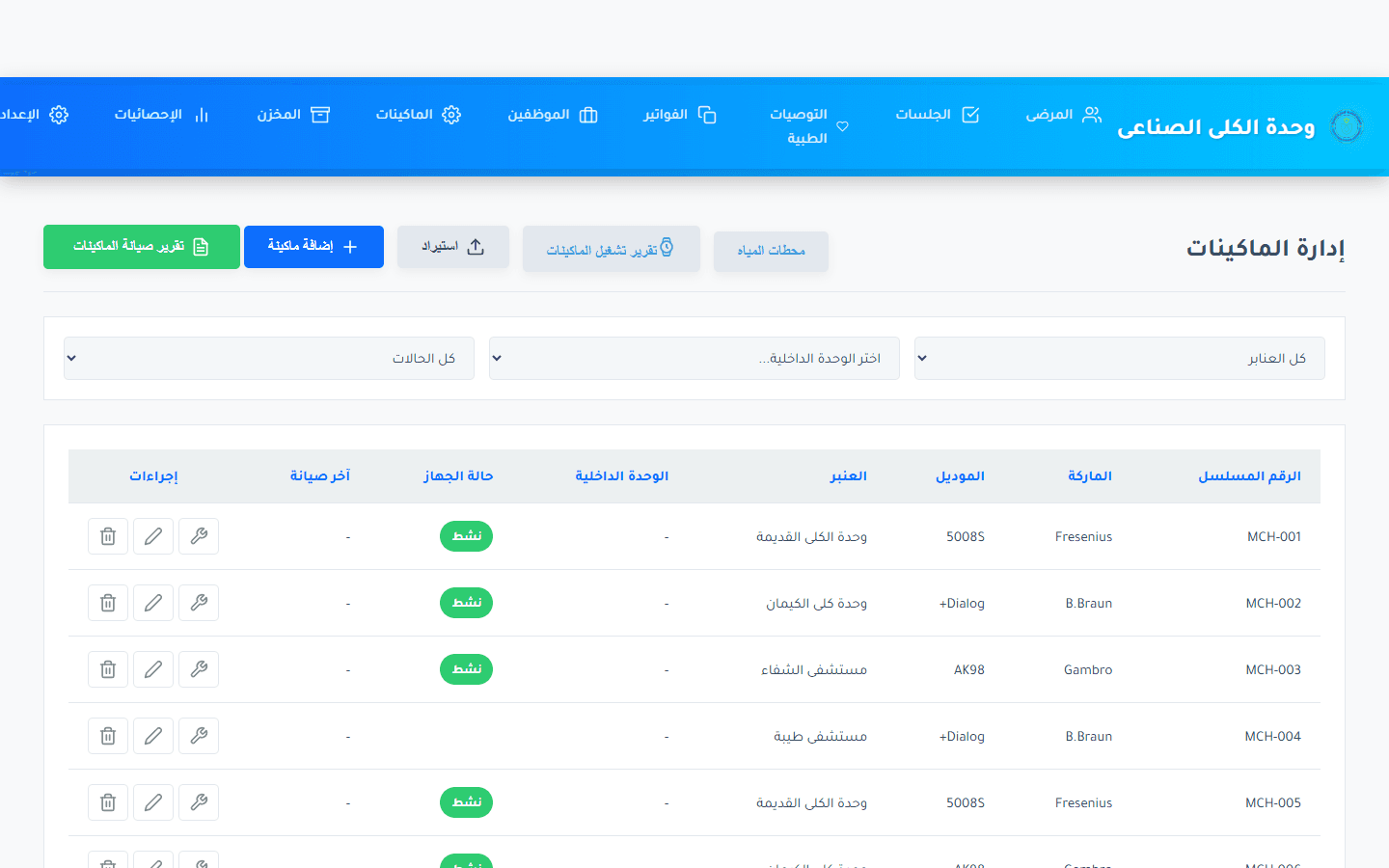
Asset inventory, operational status, and maintenance lifecycle.
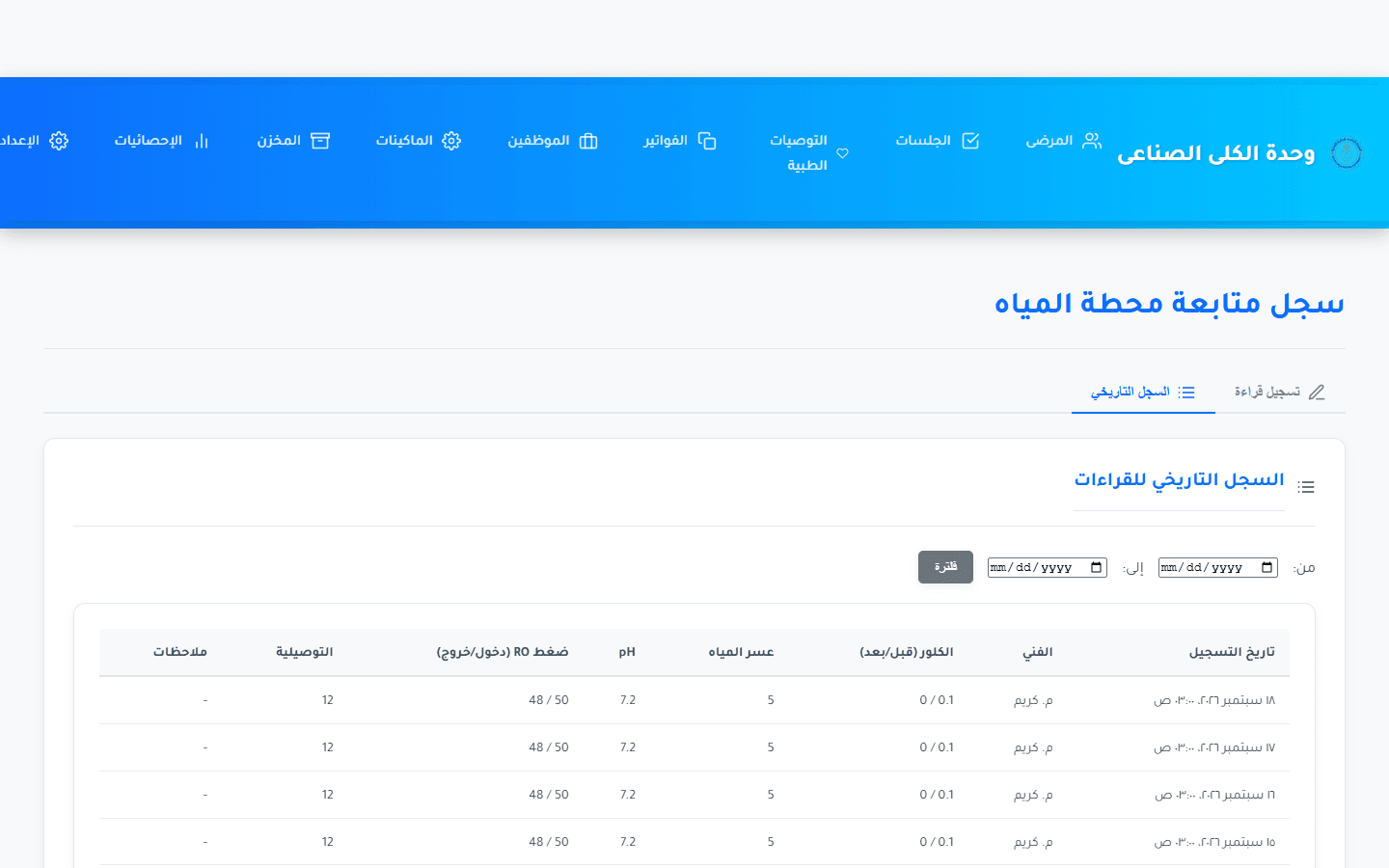
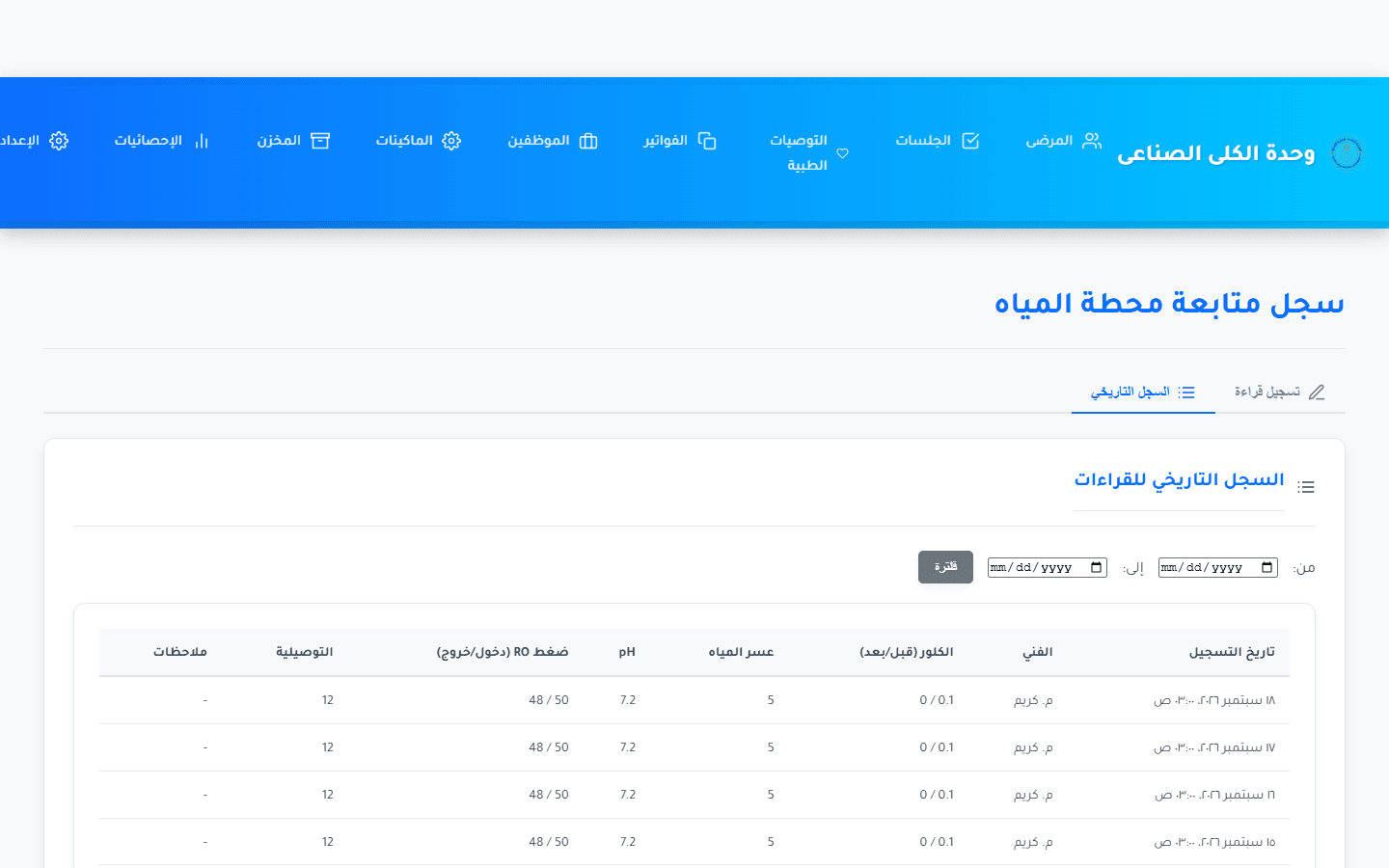
Chlorine, hardness, pH, and conductivity historical logging.
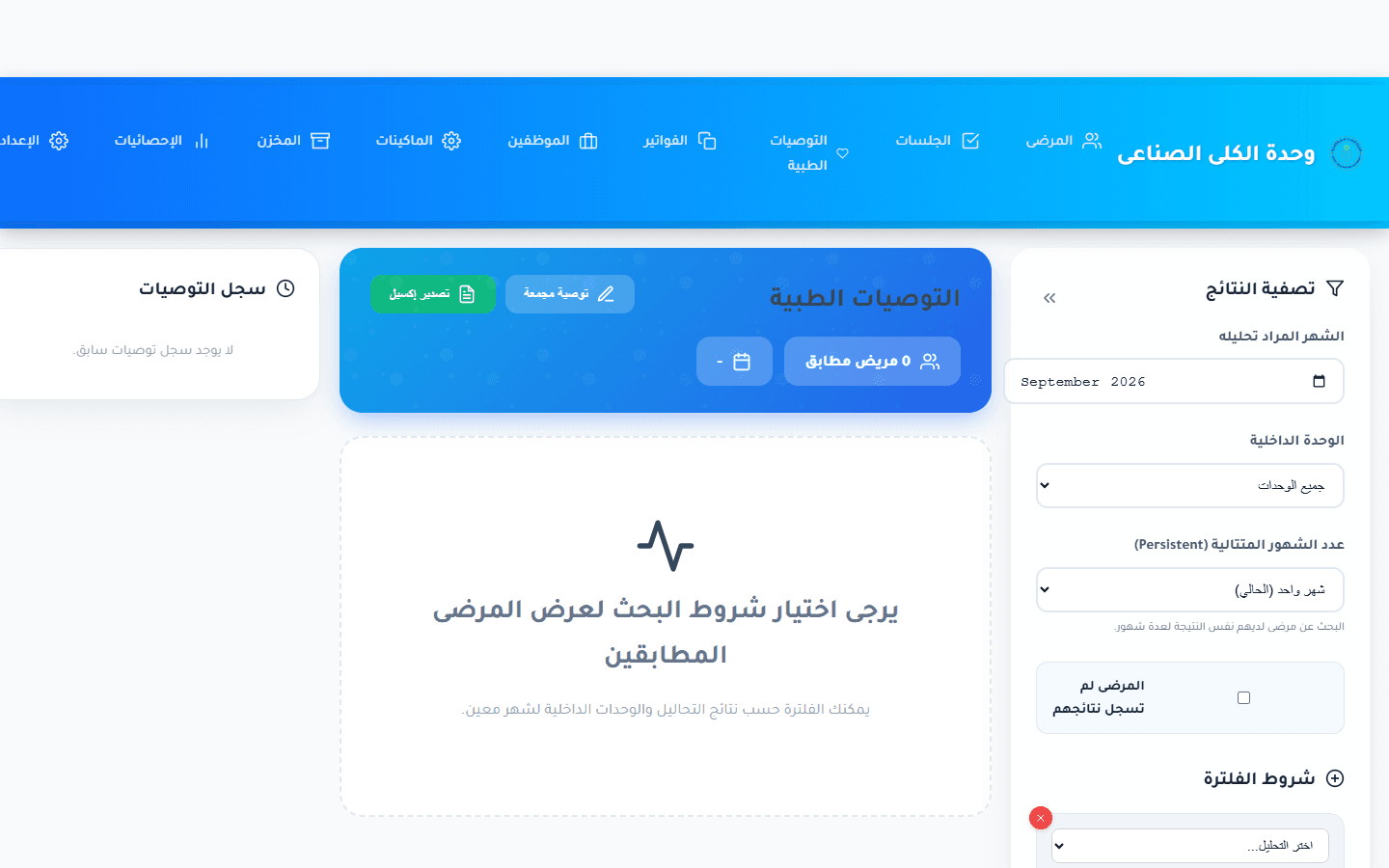
Laboratory result tracking and clinical decision support workflows.
Invoice generation and financial tracking per session or patient.
Medical consumable tracking with low-stock alerting.
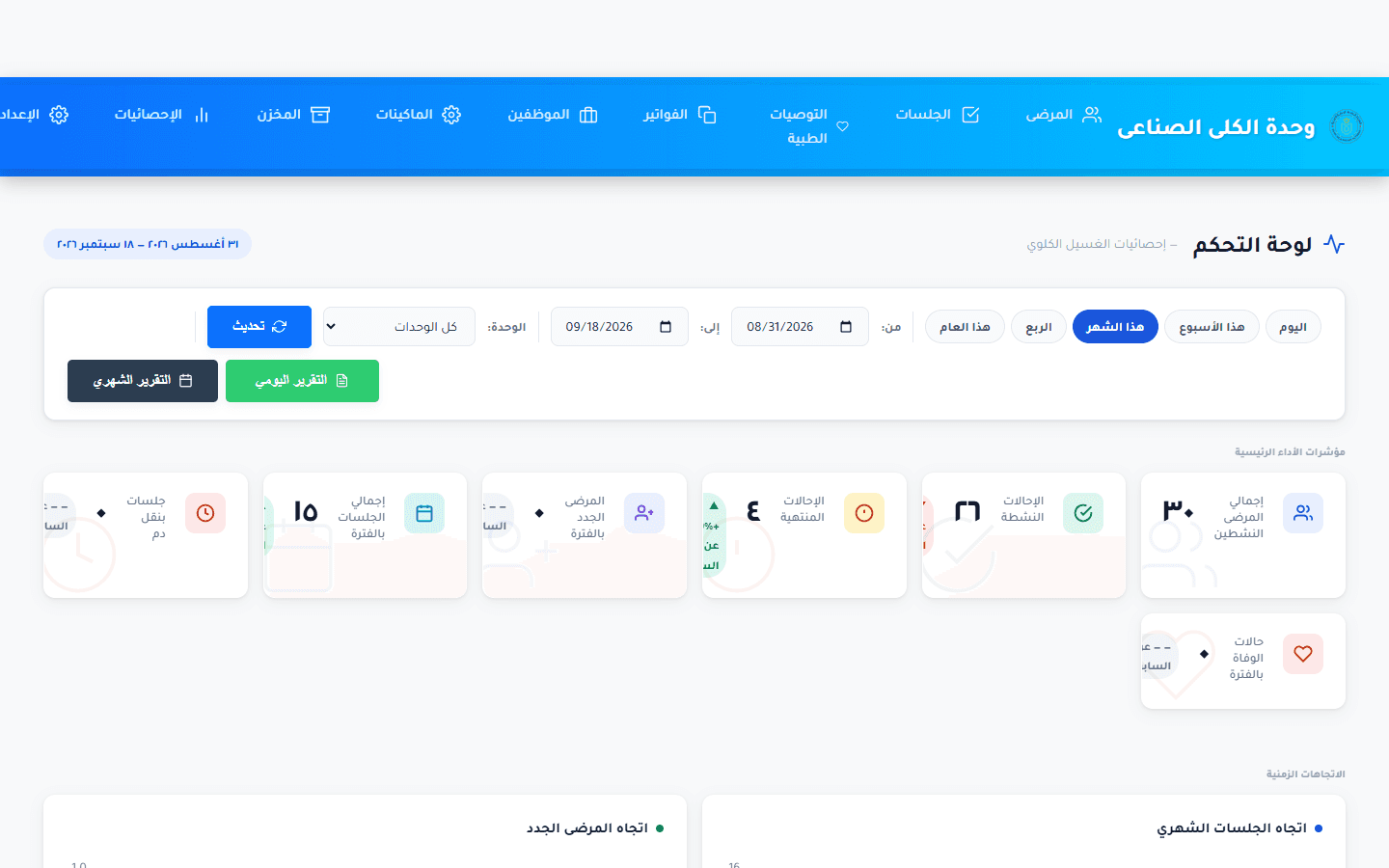
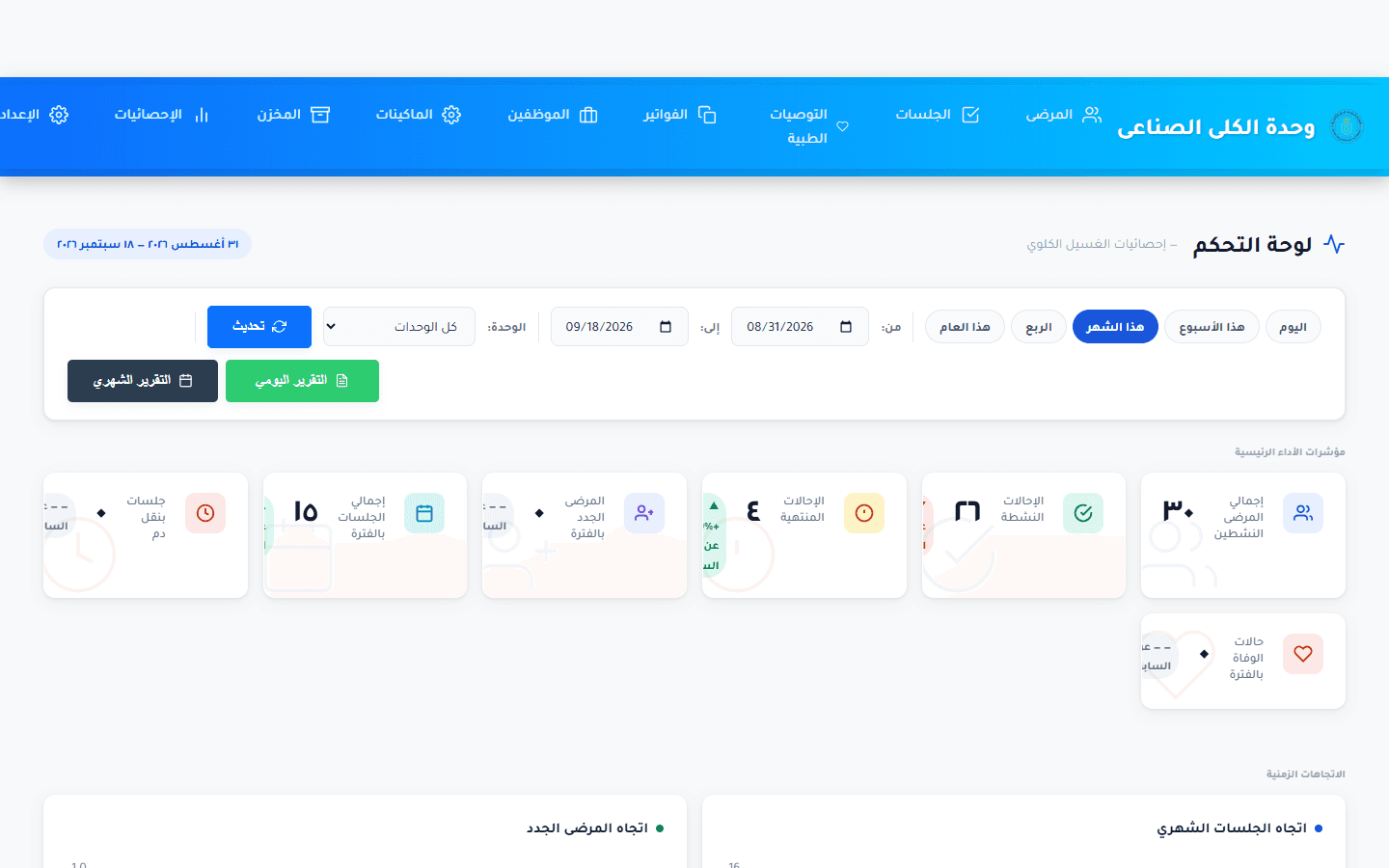
Operational statistics, session trends, and shift-level reporting.
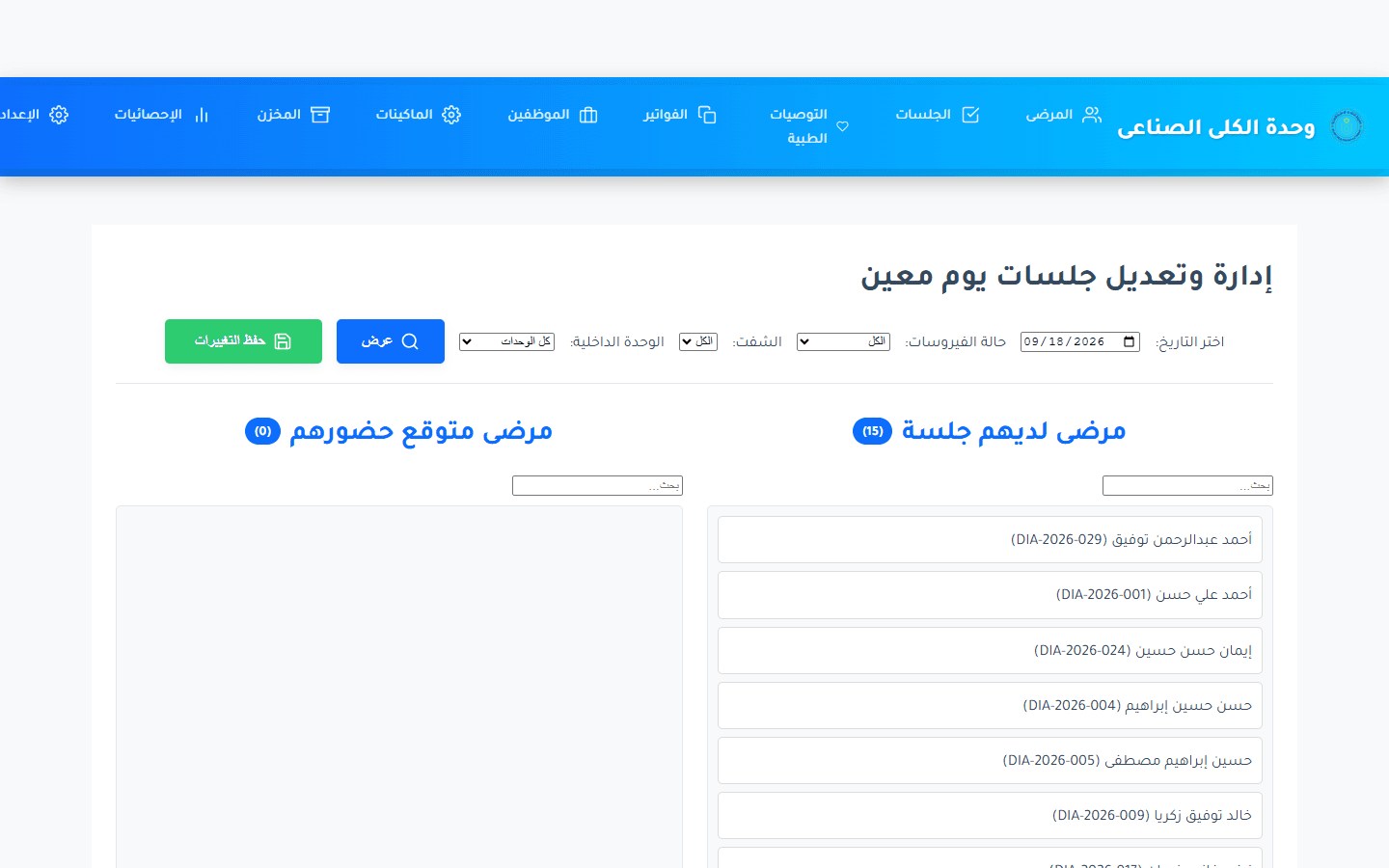
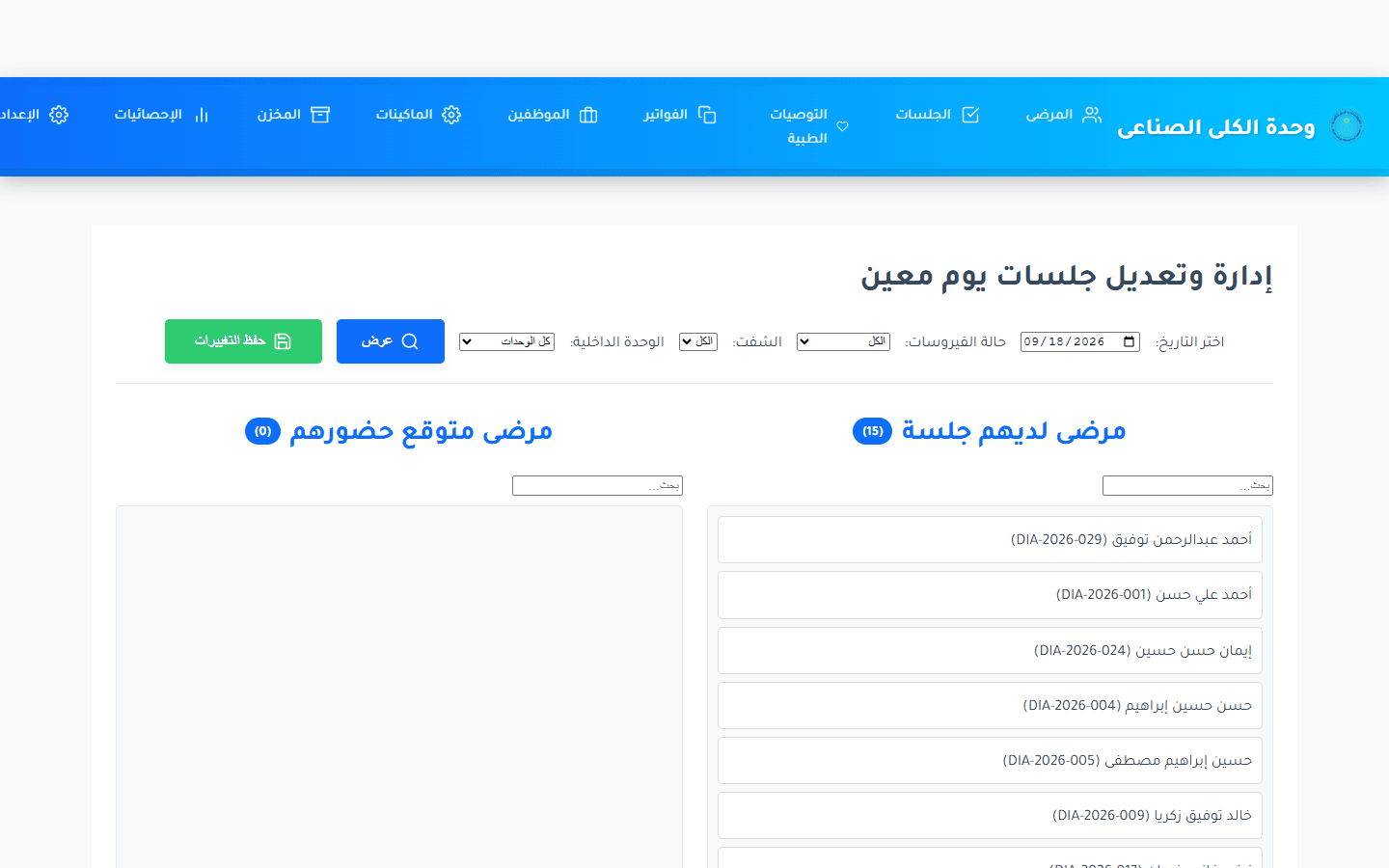
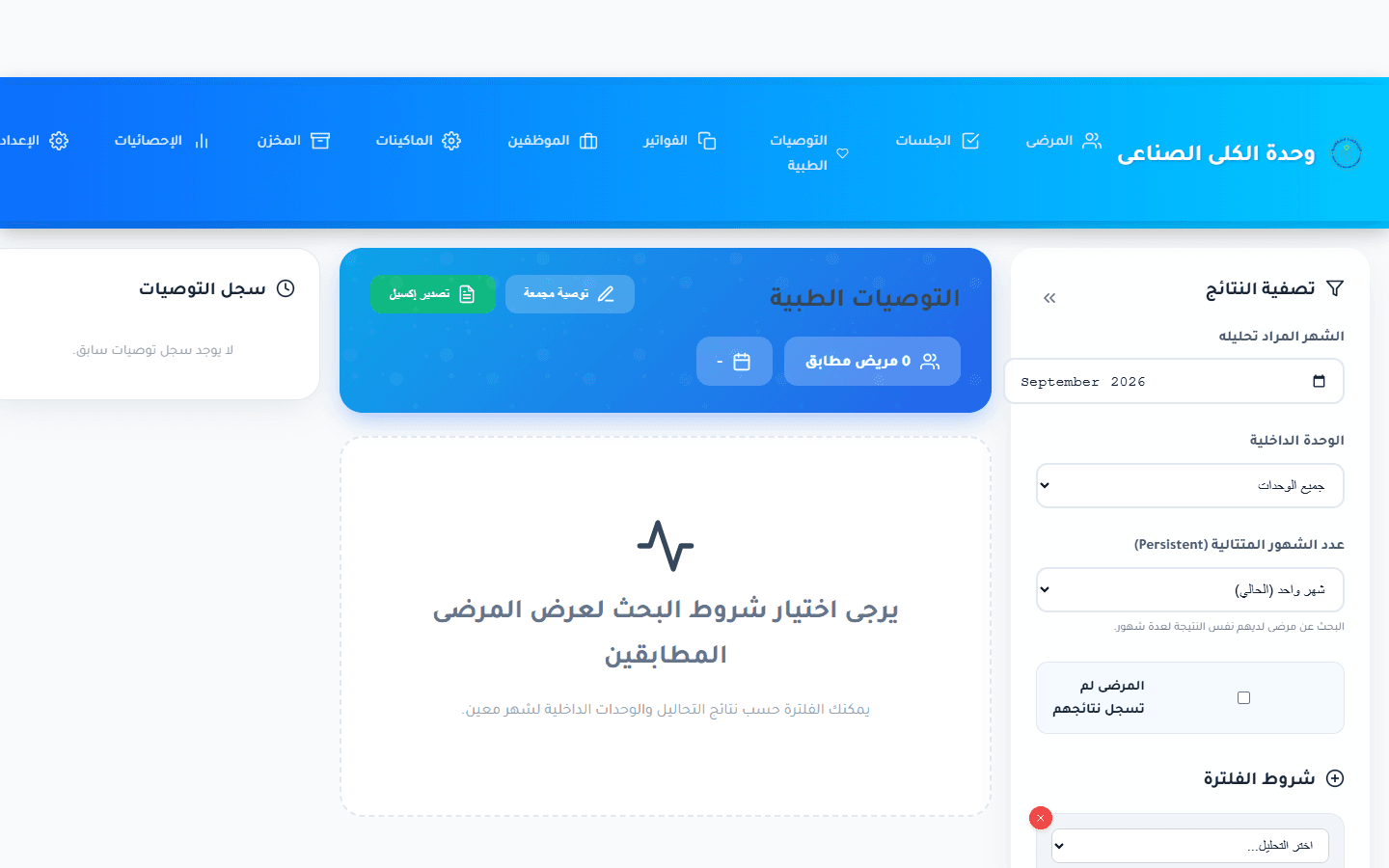
A centralized workflow for coordinating scheduled dialysis patients, distributing them across shifts and machines, and tracking each session's status throughout the operational day.

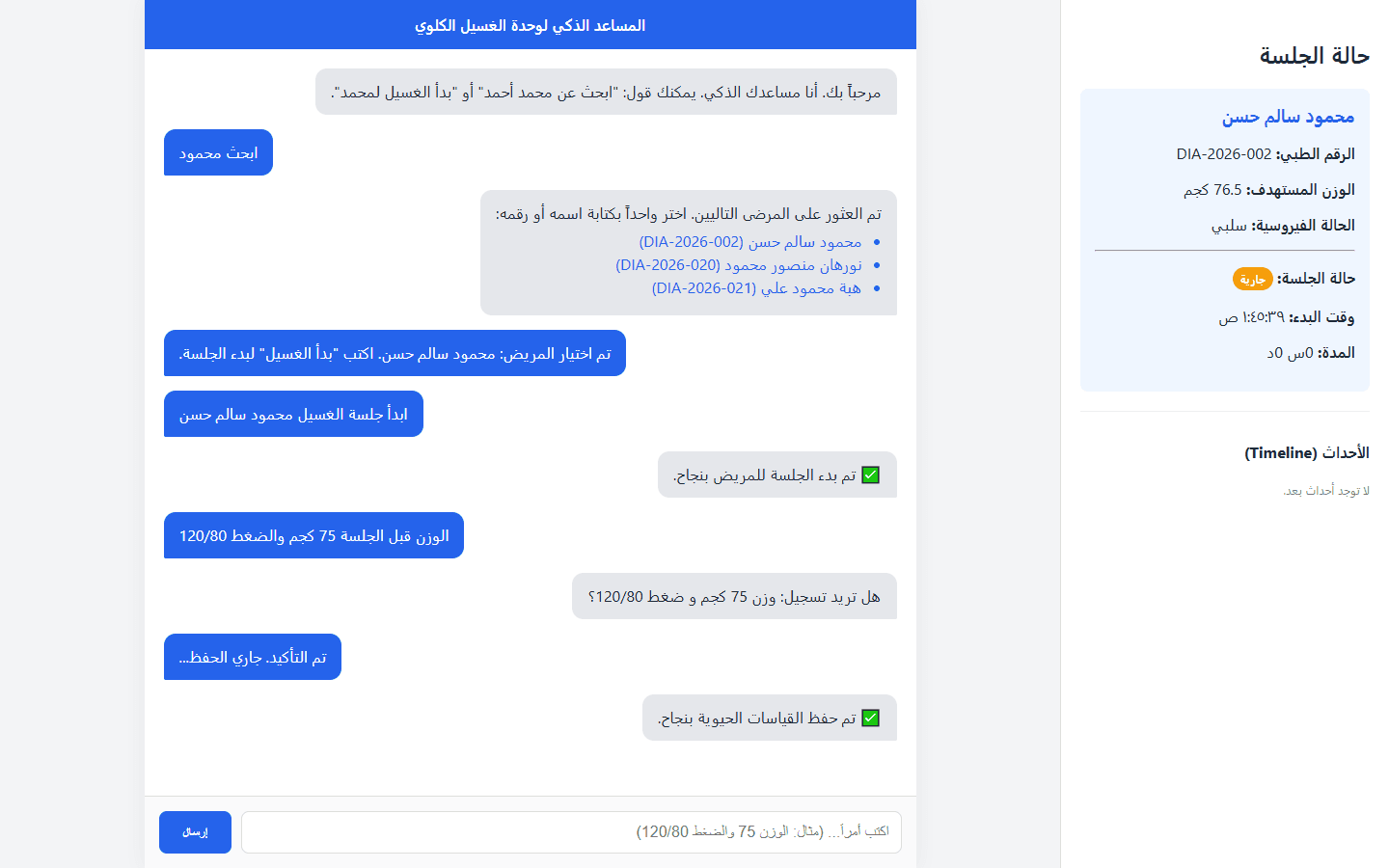
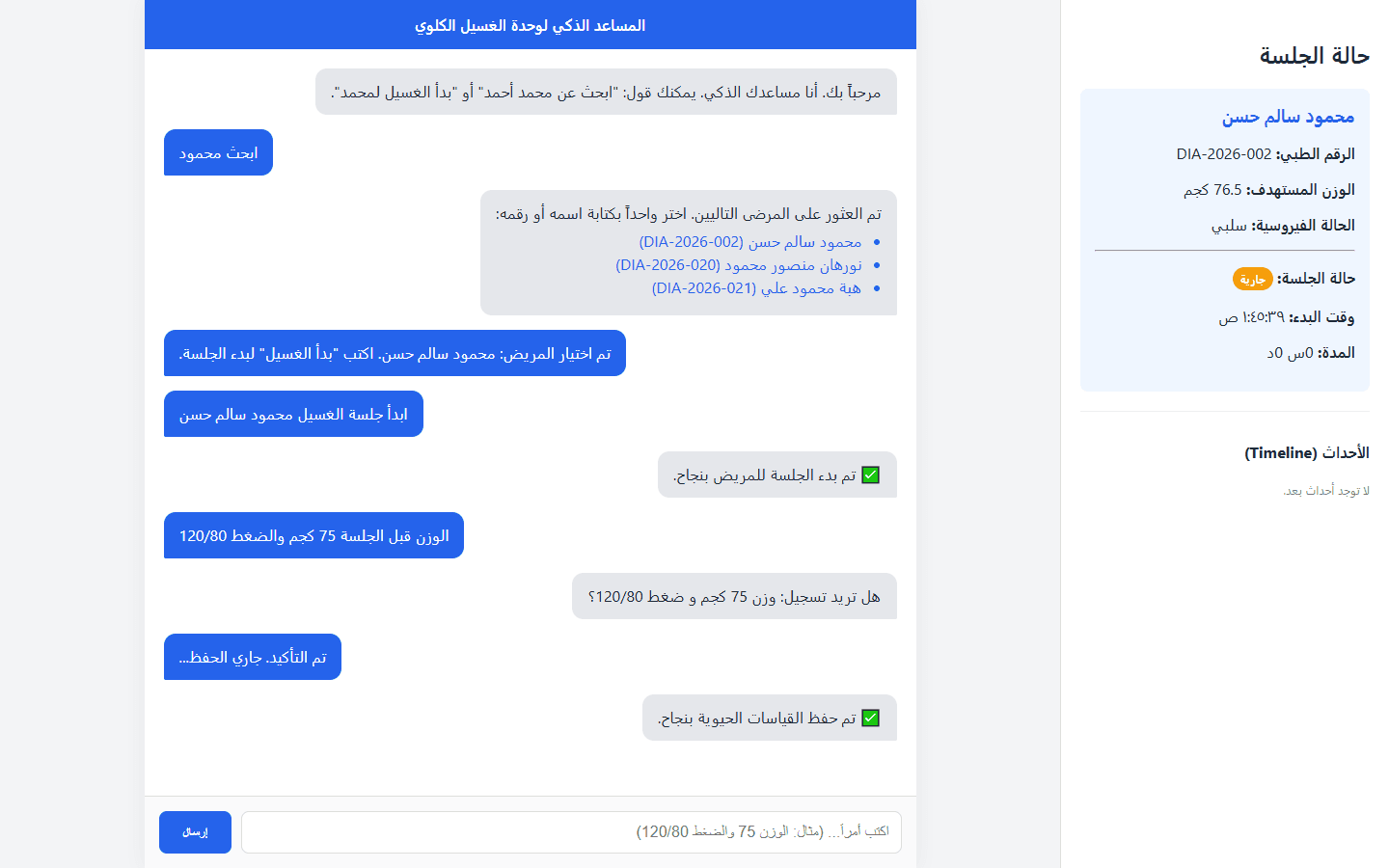
An Arabic-language conversational interface that converts operational clinical instructions into structured dialysis session data. Clinical staff input observations naturally in Arabic; the NLP parser extracts intent and records structured values.

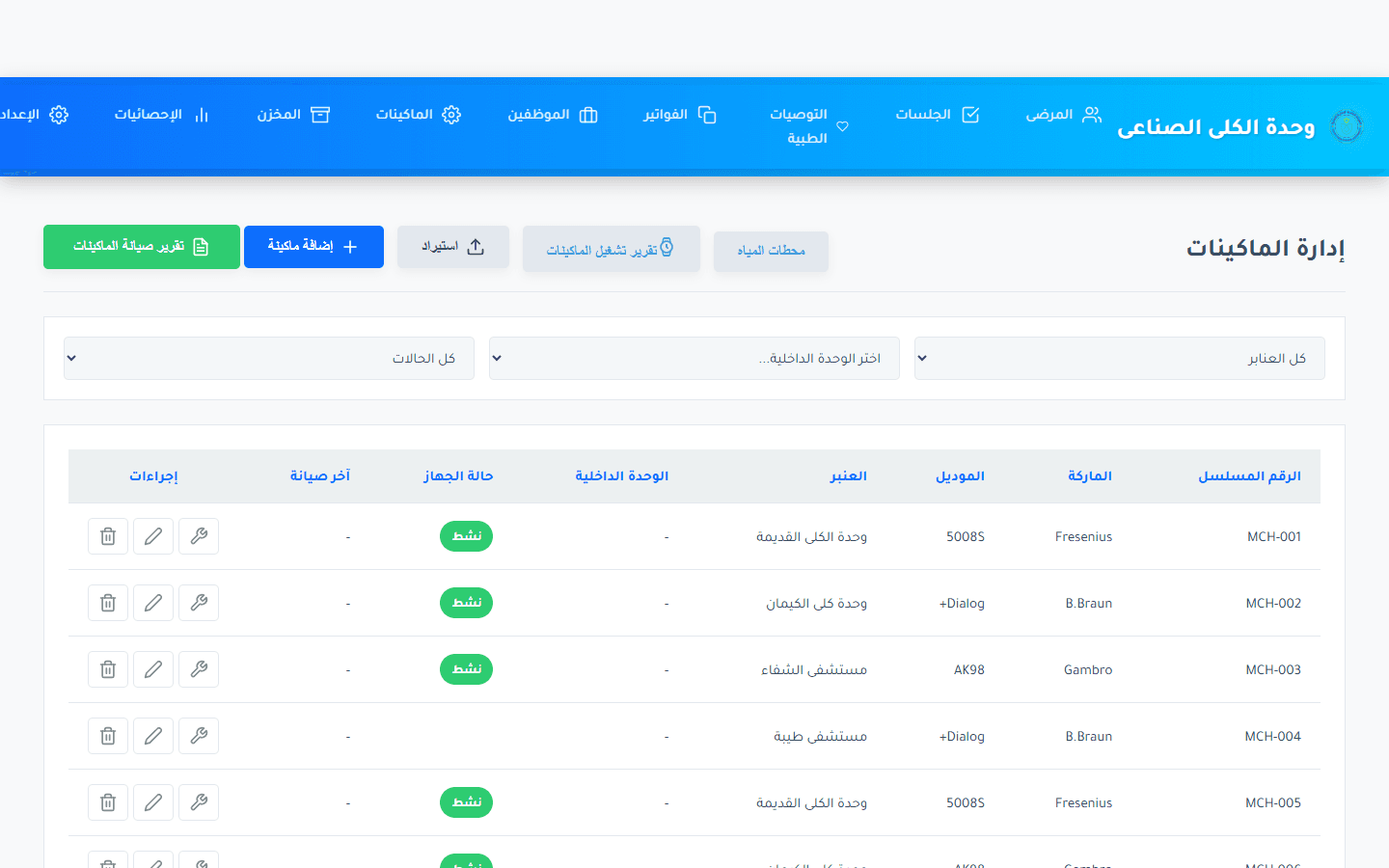
Centralized visibility into the dialysis machine fleet — tracking inventory, ward assignments, operational status, and the full maintenance lifecycle including preventive and corrective records.

Dialysis operations extend beyond patient records. Water quality is a clinical safety requirement — the system provides structured logging of RO water parameters and historical trend visibility.

Laboratory result tracking surfaces actionable decision-support prompts for clinical review. The system flags values outside reference ranges and presents them as a structured recommendation workflow — not autonomous diagnosis.

A monolithic but well-structured web application, designed to run on local infrastructure within a clinical environment without internet dependency.
Modeling recurring dialysis schedules, daily sessions, multiple shifts, machines, and the operational constraints between them — while keeping the UI usable for non-technical clinical staff.
The platform is designed to remain fully operational on a local Windows environment without any internet connection — a hard requirement for the clinic environment it targets.
Translating real dialysis-unit processes into structured software — including clinical vocabulary, Arabic NLP parsing, and RO water monitoring — required deep domain understanding beyond standard CRUD patterns.