Patient Administration
Centralized patient records give reception staff a structured starting point for registration, search and operational follow-up.
An integrated operations platform connecting patient administration, appointments, reception workflows, medical services, billing, day-surgery operations, inventory and management reporting.
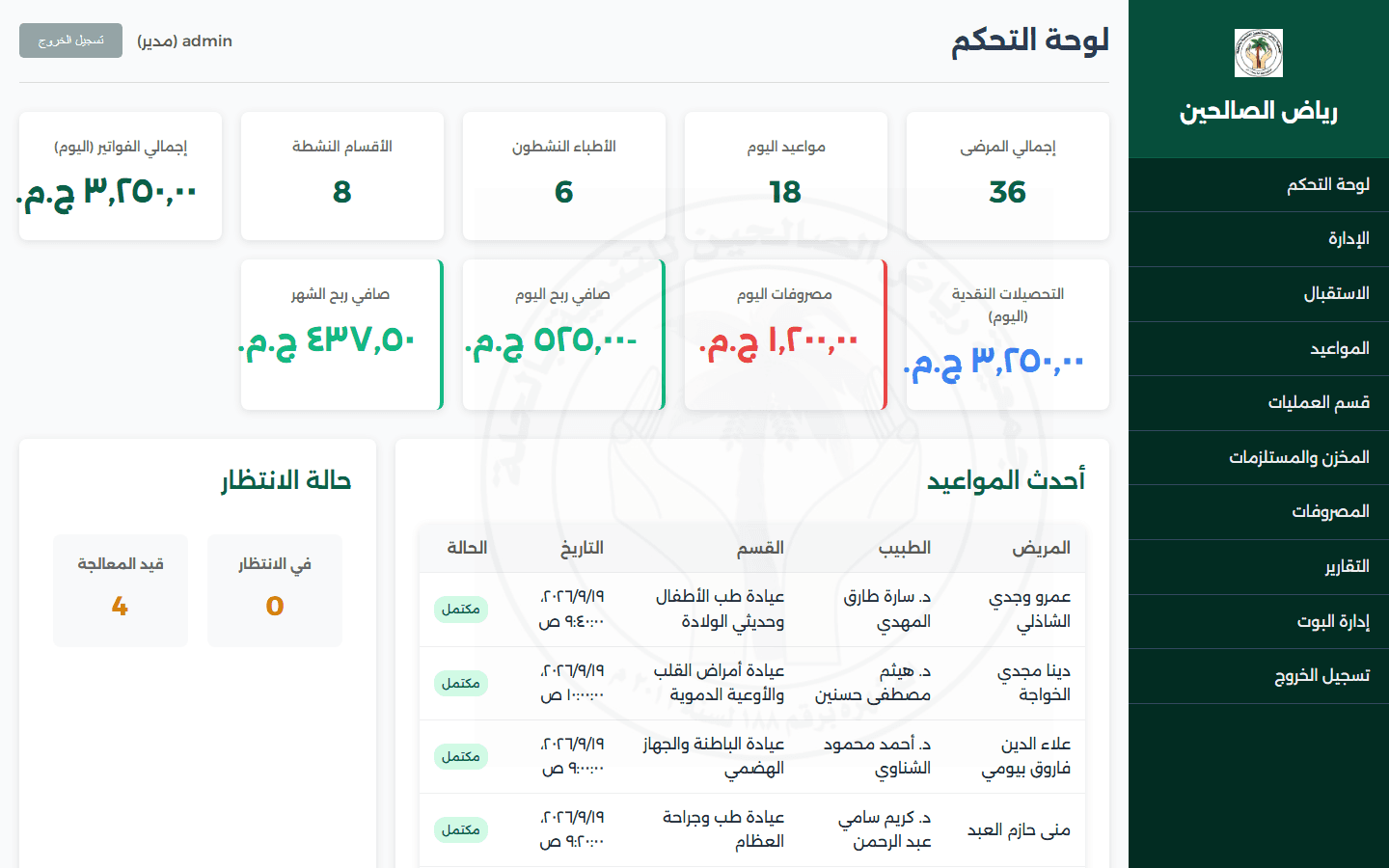
Daily operations span patient registration, physicians, departments, appointments, reception queues, service delivery, billing, surgical procedures, medical supplies and management reporting.
Managing these processes independently fragments information and makes it harder to maintain a consistent operational view across the center.
The system organizes interconnected administrative, service and financial workflows around shared operational records, giving reception and management a more coherent view of daily activity.
Centralized patient records give reception staff a structured starting point for registration, search and operational follow-up.
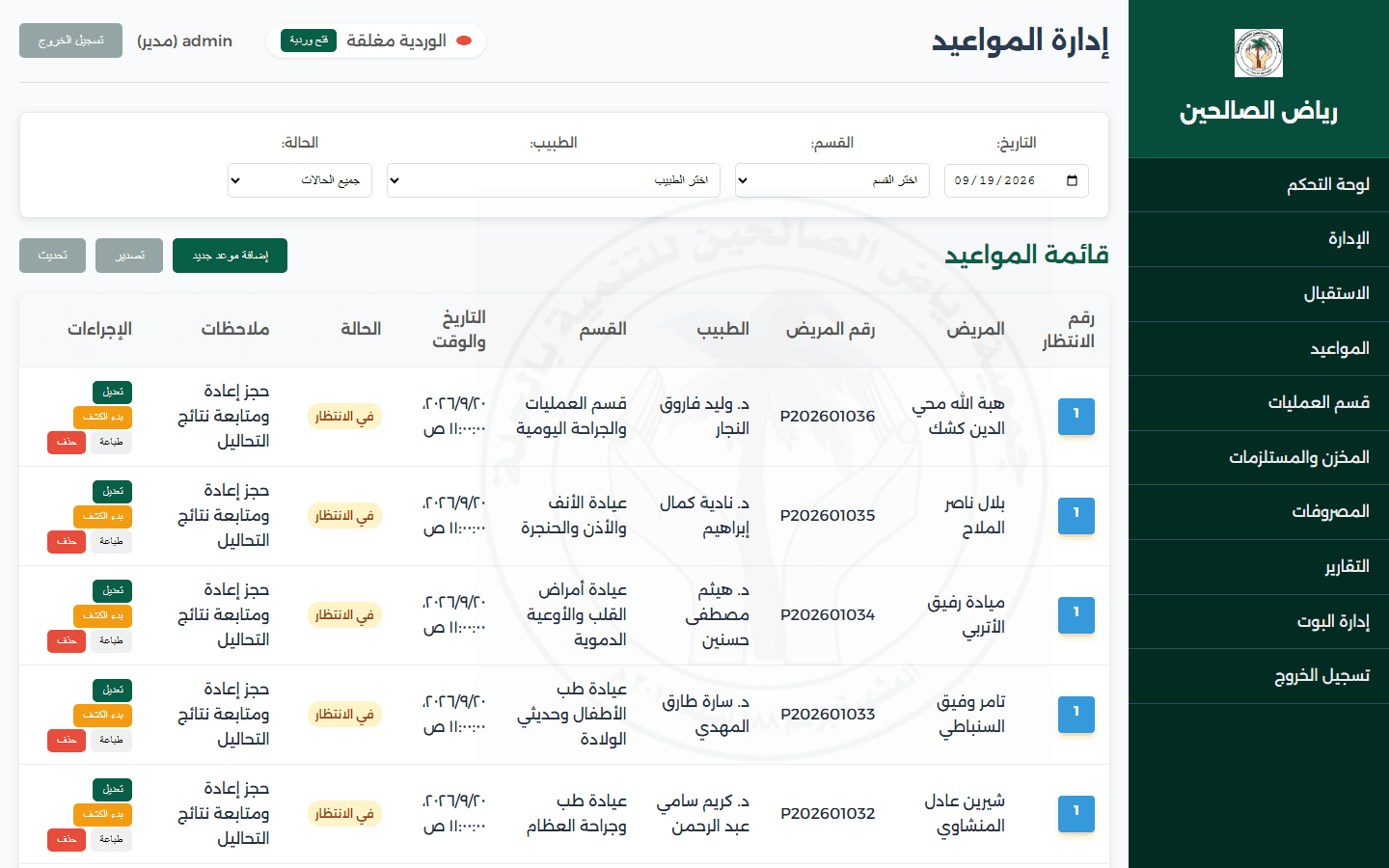
Appointments connect patients with doctors and departments, while reception workflows expose waiting and examination states across the medical center.
Operational modules coordinate services across outpatient clinics and day-surgery workflows instead of treating each department as an isolated system.
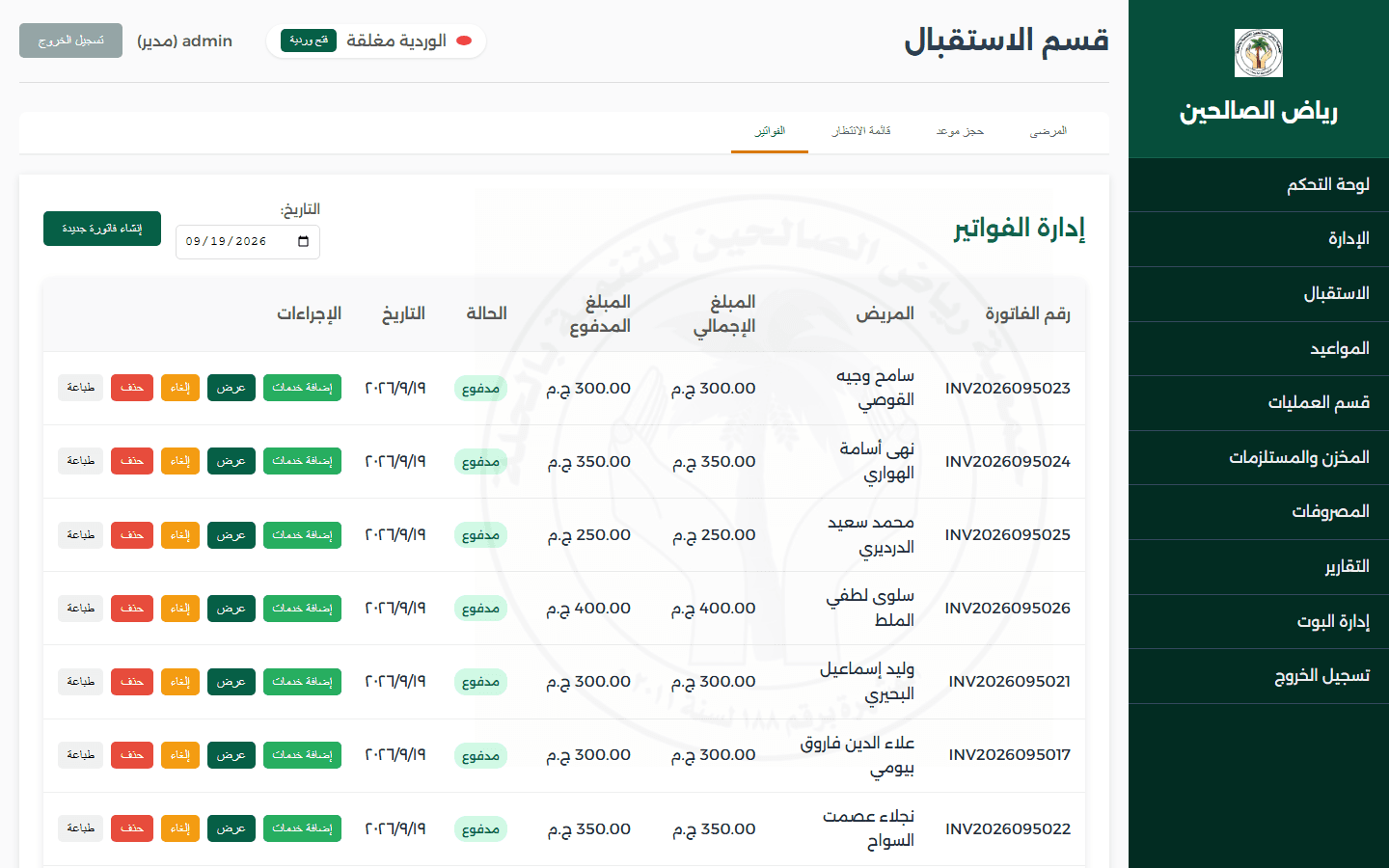
Invoices connect delivered services with patient billing, payment status and daily financial activity.
Medical supplies are tracked through stock quantities, categories, unit values, expiry dates and low-stock visibility.
Operational and financial information is consolidated into dashboards and reports for management-level visibility.
The engineering challenge is not simply storing records. It is keeping multiple medical-center workflows connected as patients move between administrative and service processes.
The platform brings patients, doctors, departments and administrative workflows into a shared operational environment.
Structured appointment records connect patients, doctors, departments, dates, workflow status and reception activities.
Waiting-state visibility helps reception coordinate patients across different clinics and examination stages.
Patient services connect with invoices, collections, expenses and reporting to provide operational financial visibility.
Inventory records expose stock levels, classifications, values, expiry information and low-stock conditions.
The reporting layer combines operational and financial indicators rather than limiting analytics to a single department.
Appointment records associate patients with physicians, departments and scheduled times. Reception then provides a department-oriented view of patients moving through waiting and examination states.
The billing workspace maintains patient invoices, totals, payment status and service-related actions while management reporting consolidates collections and other financial indicators.
These screens use demonstration data and show the major operational areas represented by the system.
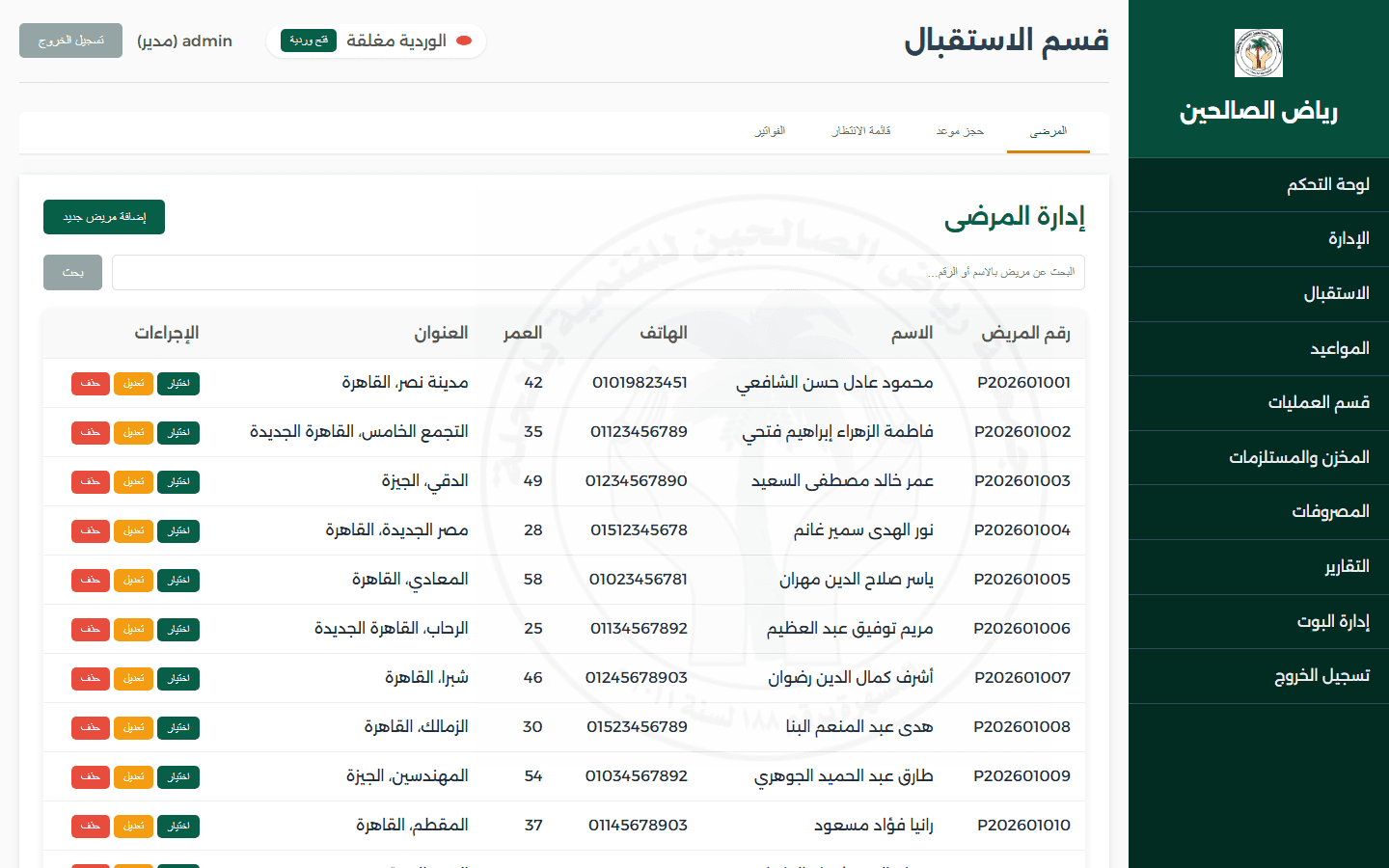
Searchable patient registry with structured patient identifiers and administrative information.
Appointment coordination across patients, physicians, departments, dates and operational states.
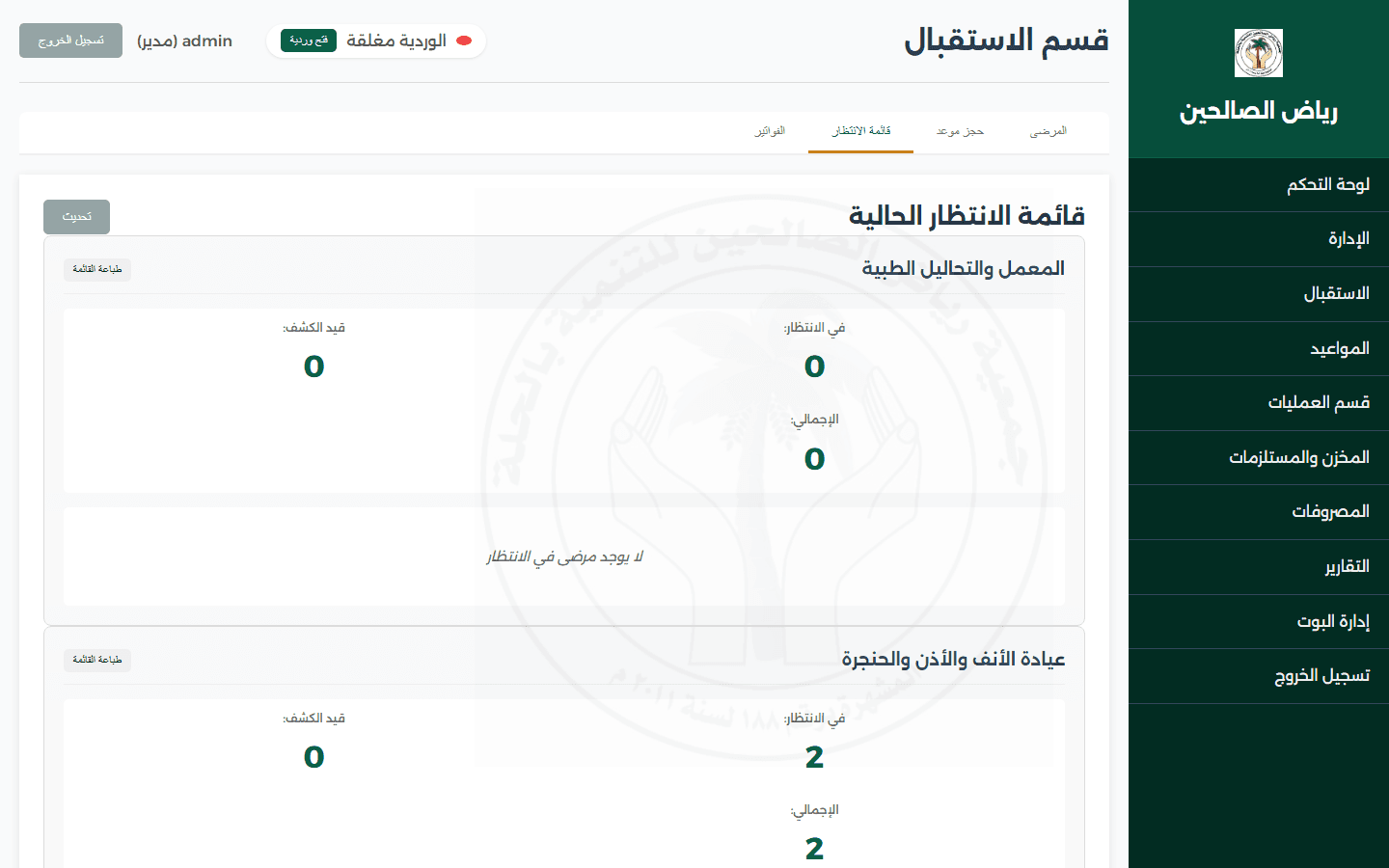
Department-level waiting visibility for coordinating patient flow through the medical center.
Patient invoice management with service, payment and document actions integrated into the workflow.
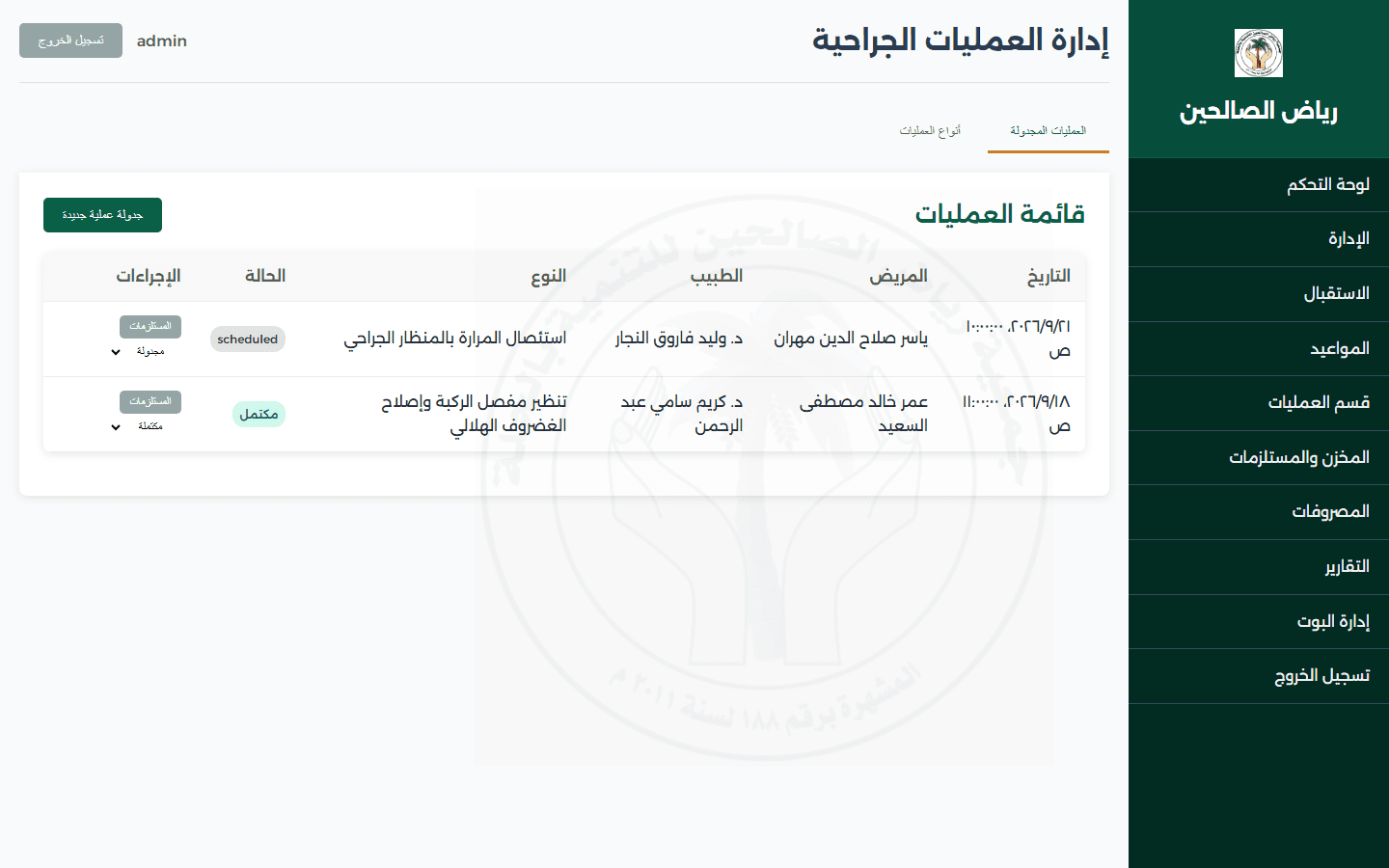
Structured scheduling and operational tracking for surgical procedures.
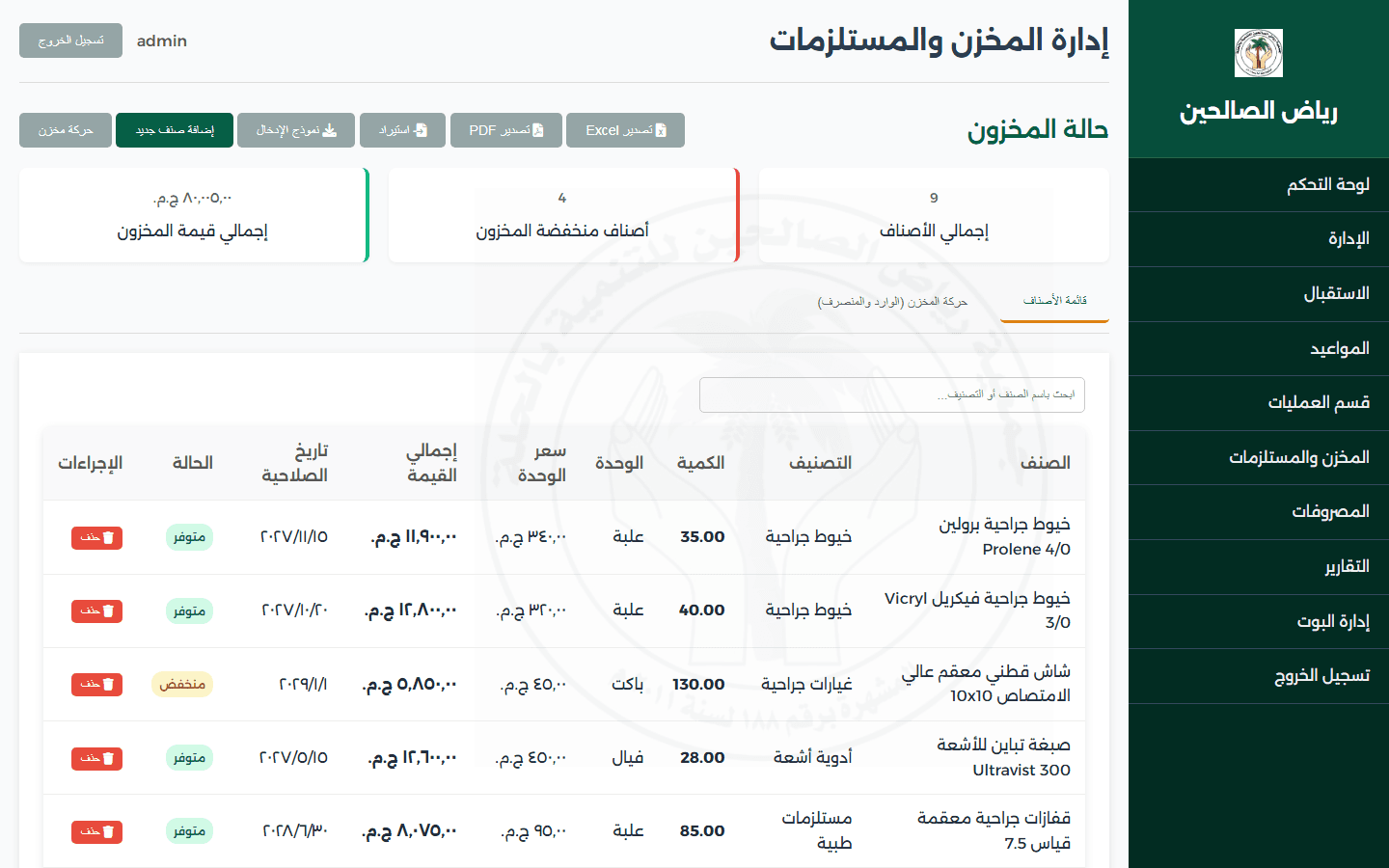
Stock visibility across medical supplies, quantities, classifications, values and expiry dates.
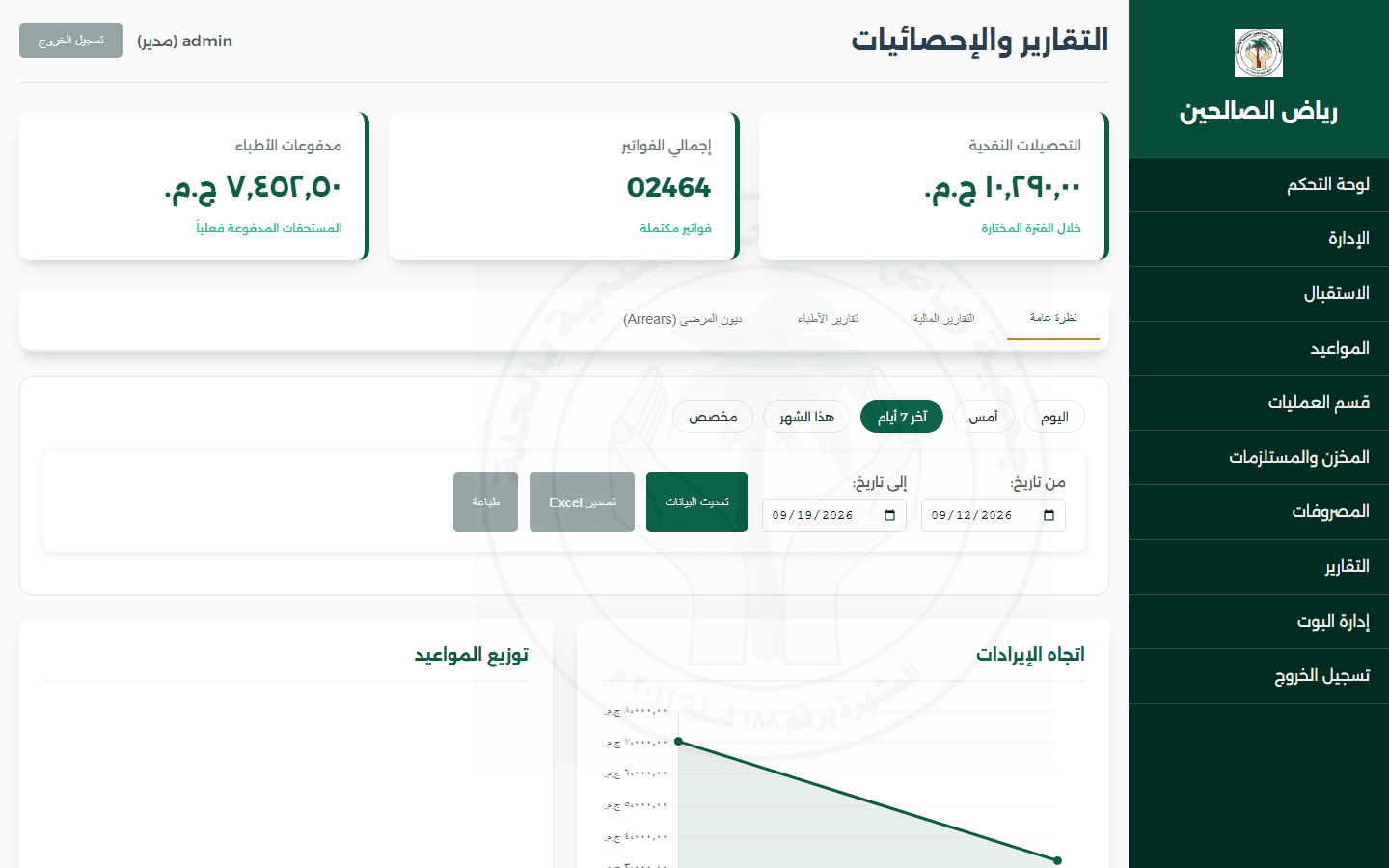
Financial and operational reporting with date filters, summary indicators and management analytics.
While a focused clinic system centers on longitudinal clinical encounters, this project demonstrates coordination across a broader medical-center operation.
Its portfolio value comes from connecting reception, appointments, surgical operations, financial workflows, inventory and management reporting within the same operational environment.
The project demonstrates the design of software around real organizational workflows rather than isolated CRUD screens, connecting patient-facing processes with operational, inventory and financial management.
Explore more projects